Why Dried Flowers Are the Perfect Modern Decor Investment
Introduction
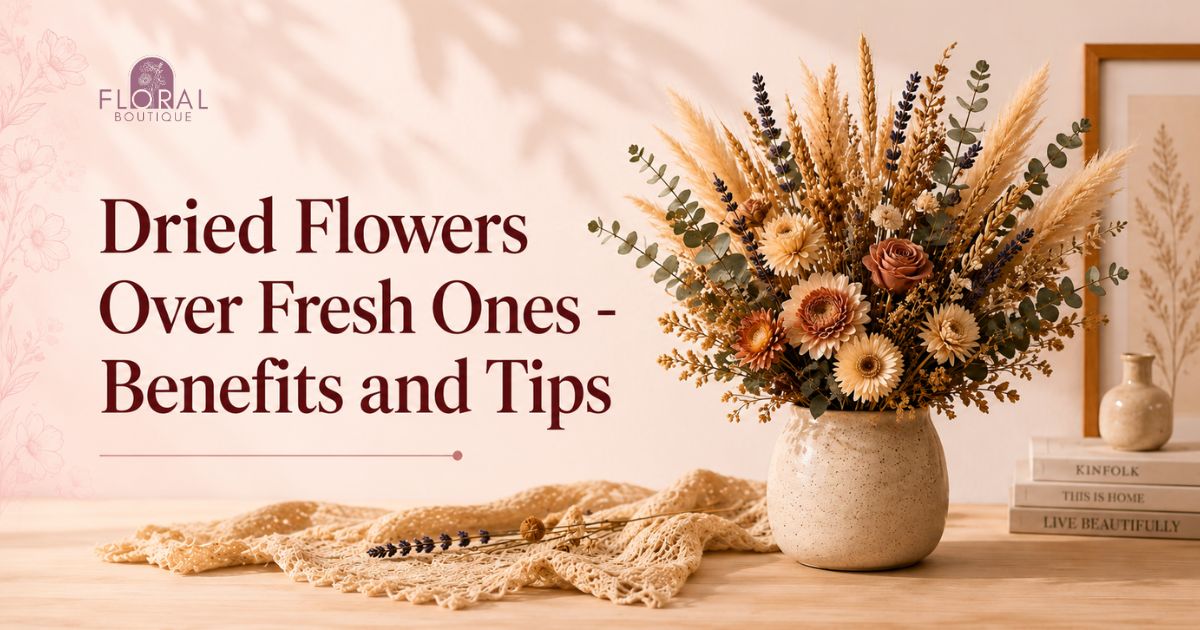
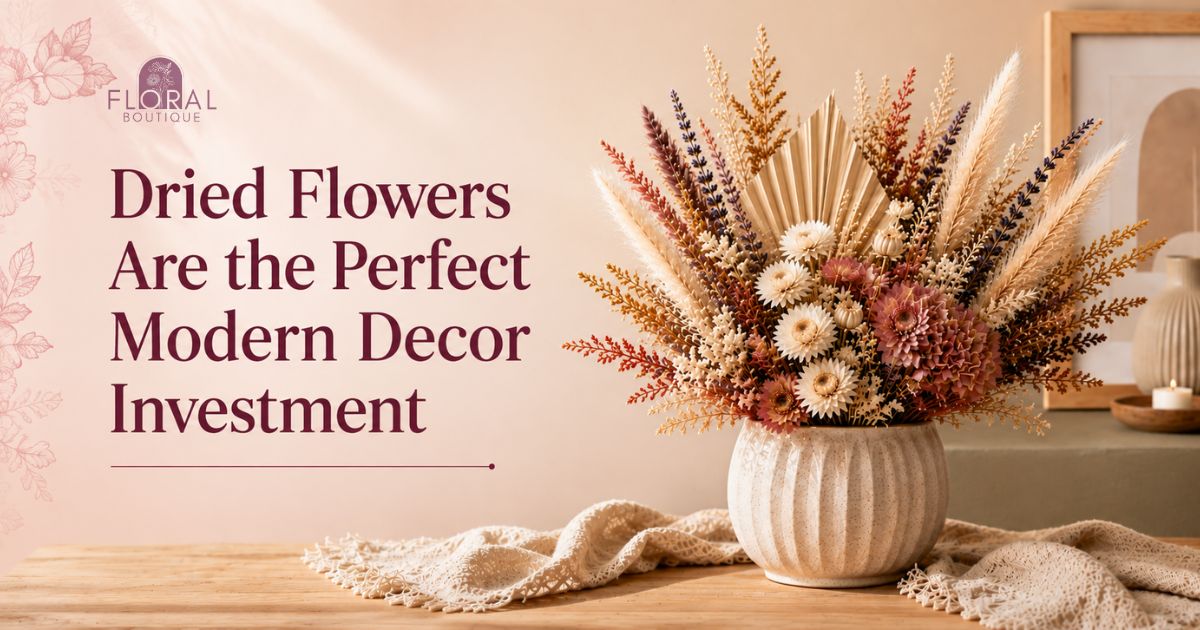
Walk into a nicely put-together home these days, and there's a decent chance you'll notice something a little odd sitting on the console table: flowers that have clearly been there for months, not days. That's not someone forgetting to clean up; that's a dried flower bouquet, and it's turned into one of the more sensible decor choices people are making for their homes right now.
Flowers used to be a short-term luxury. You'd buy them, enjoy them for a week, then toss them once they wilted. But as more people gravitate toward slower, more considered interiors, the dried flower bouquet has carved out its own laneas less of an "impulse buy," more actual decor investment. You still get the warmth and texture of real blooms, just without the upkeep, and without watching petals end up in the bin every few days.
This guide walks through what dried flowers actually are, why they've become such a popular pick, how to style them room by room, and how to keep them looking good for as long as possible. If you've been going back and forth on whether they're worth it, this should help you make up your mind.
What Exactly Are Modern Dried Flowers?
Modern dried flowers start as real, living blooms and botanicals. Growers and florists remove the natural moisture through air-drying, silica-gel drying, or pressing, which lets the flower hold its shape more or less permanently. That's the key difference from silk or artificial flowers: those are manufactured to look like the real thing, while dried flowers actually were the real thing. You can usually tell: petals curl slightly, color varies a bit from stem to stem, and none of it looks quite so uniform. That imperfection is part of the charm.
What separates today's dried arrangements from the ones your grandmother might have kept is really just the design thinking behind them. Older dried bouquets tended to lean rustic, sometimes almost country-cottage in feel. Newer arrangements are put together with the same care as a fresh bouquet, with real attention to color, proportion, and a look that fits contemporary, minimalist, or boho spaces just as easily. A well-put-together dried flower arrangement now reads less like something forgotten in a corner and more like a genuine styling choice.
That shift is a big part of why dried flowers stopped being a niche craft item and became a real decor category, one that interior stylists, gifting brands, and everyday homeowners now treat less like a passing trend and more like something worth spending on for the long haul.
The Top Benefits of Choosing Dried Flower Arrangements
There's more going on here than just looks. Here's what actually makes the case for dried florals over fresh-cut ones.
Longevity and Durability
This is probably the number one reason people switch. Even a fresh bouquet that's well looked after rarely makes it past a week. A good-quality dried flower bouquet, on the other hand, can hold up for one to three years with basic care, and some of the sturdier varieties go even longer than that. That's not a small upgrade; it changes the whole equation. Instead of buying flowers as something you'll enjoy briefly, you're bringing home a piece of decor that's actually going to stick around.
Exceptional Cost-Effectiveness
At first glance, a dried arrangement might cost about the same as a fresh bouquet, sometimes even a bit more upfront. But do the math over a year, and it looks very different. Replace a fresh bouquet every one to two weeks, and that adds up to a fairly hefty annual spend. Buy one dried arrangement, and it keeps delivering the same visual payoff for months, sometimes years, on end. Over time, it's simply the better investment.
Low Maintenance (Zero-Effort Greenery)
No watering, no trimming stems, no changing out cloudy vase water, no last-minute scramble because the flowers wilted right before guests showed up. Dried arrangements really are zero-effort greenery, a good fit for busy professionals, people who travel a lot, or honestly anyone who wants flowers around without one more thing to maintain each week.
Eco-Friendly and Sustainable Lifestyle
Fresh flowers come with a real environmental footprint, especially when they're shipped long distances, water-heavy growing conditions, refrigerated transport, and constant waste as old bouquets get thrown out and replaced. Dried flowers largely sidestep all of that. No refrigeration needed, far less repeat waste, and they're often sourced from local, seasonal blooms to begin with. If sustainability matters to you, this is a fairly easy upgrade to make.
Allergy-Friendly Decor
Since dried flowers aren't actively blooming anymore, they tend to put off noticeably less pollen than fresh-cut flowers, which keep releasing pollen the whole time they're on display. That makes dried arrangements a gentler choice in households where allergies are a concern, though it's still worth keeping them dust-free, since built-up dust, not the flower itself, is usually what causes the real irritation.
Design & Styling Guide: Integrating Dried Flowers into Your Space
One of the more underrated things about dried florals is how adaptable they are. With the right arrangement, they'll work in pretty much any room or design style you've got going on.
By Room Type
-
Living Room: A tall arrangement with pampas grass or dried hydrangeas makes a great floor vase piece; it fills an empty corner with height and softness without taking over the room.
-
Bedroom: A smaller bundle of dried lavender or roses on the nightstand adds a calm, personal touch. Nothing flashy, just effective.
-
Dining Table: Dining Table: A low, wide centrepiece keeps sightlines open across the table while still bringing in color and texture, and unlike fresh flowers, it won't wilt halfway through dinner.
-
Entryway: A bold, structured arrangement by the front door makes a strong first impression, and it'll outlast a seasonal fresh bouquet by a long shot.
-
Home Office or Study: A small, understated arrangement warms up a workspace without adding anything you actually have to maintain.
Aesthetic Versatility
-
Minimalist/Scandinavian: One flower variety in a simple ceramic vase keeps things clean and uncluttered.
-
Boho: Loosely gathered arrangements with grasses and warm, earthy tones give a relaxed, textured feel.
-
Farmhouse/Rustic: Wheat stalks and muted blooms in woven or wooden vessels suit a cosy, lived-in look.
-
Modern/Contemporary: A single sculptural bloom in a matte, geometric vase becomes a striking, almost gallery-like focal point.
That flexibility explains why dried flower arrangements have found their way into such a wide range of homes. They don't ask you to commit to one particular style; they just adapt to whatever style you've already got.
Essential Care Tips to Maximize Lifespan
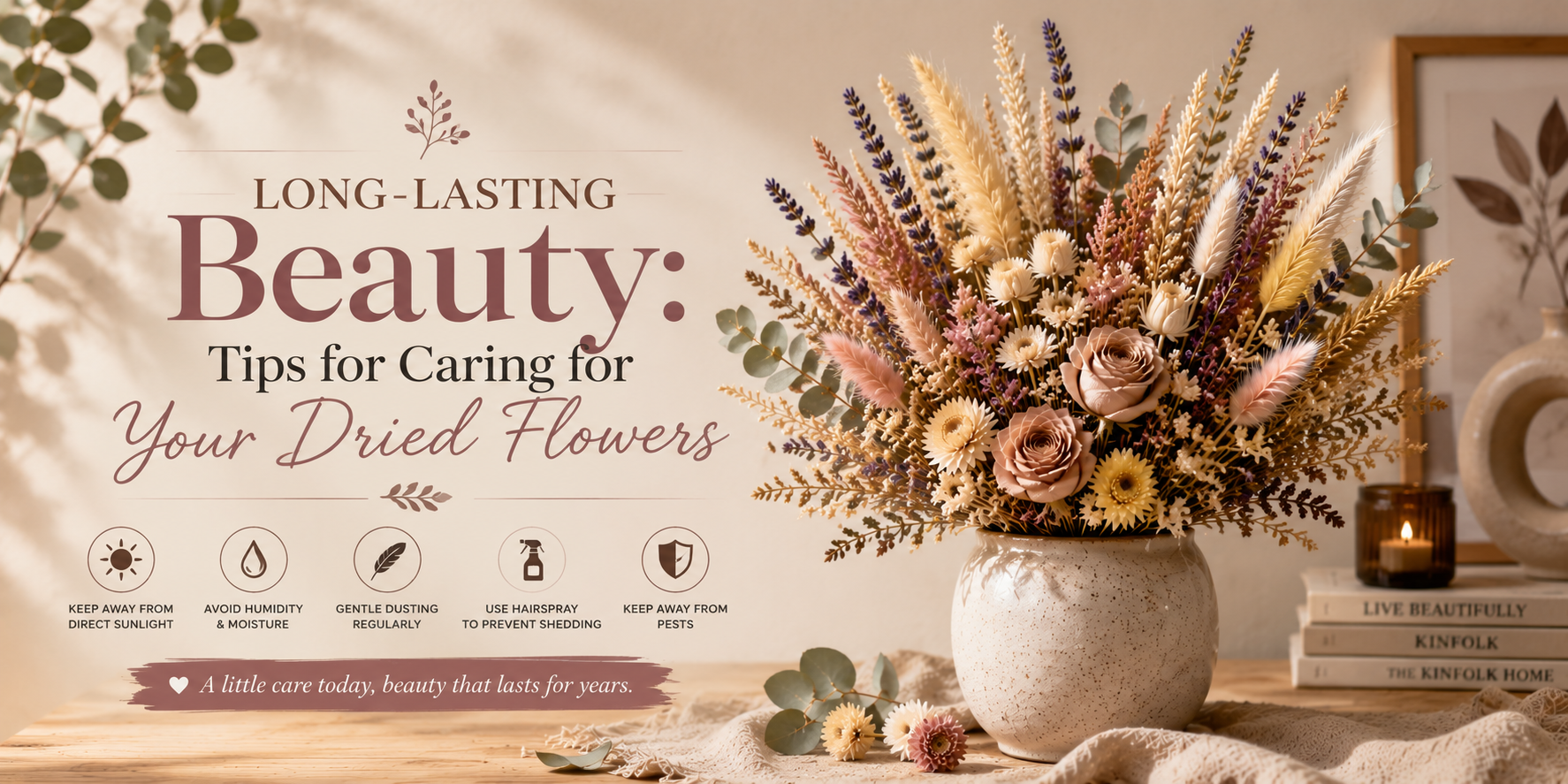
Dried flowers don't ask for much, but a few small habits will stretch their lifespan even further.
-
Keep them out of direct sunlight; it fades the colour and makes petals brittle over time.
-
Avoid high-humidity spaces like a poorly ventilated bathroom, since moisture can make petals droop or develop mould.
-
Dust gently every couple of weeks with a soft makeup brush or a cool hairdryer setting held at a distance; never use water or a damp cloth.
-
Mist lightly with unscented hairspray now and then to cut down on petal shedding, especially with delicate filler flowers.
-
Store extra stems in a dry, sealed container with a silica gel packet if you're saving them for later.
Stick to even a couple of these habits, and an arrangement should keep looking good for years rather than months.
Conclusion
Once you look past the surface appeal, it's not hard to see why dried florals have earned a lasting place in modern homes instead of fading out as a trend. A dry flower bouquet checks nearly every box that matters: longevity, cost-effectiveness, low maintenance, sustainability, and genuine style range, all while asking for a fraction of the effort fresh flowers demand.
If you've been looking for a decor choice that feels intentional, lasts, and fits into your space without a fight, a well-chosen dry flower bouquet is worth it. Take a look at Floral Boutique's collection of dried flower arrangements and bring home something built to stay beautiful, no watering can required.
Frequently Asked Questions
1. Is a dried flower bouquet really worth the investment compared to fresh flowers?
Yes, the upfront cost is often similar, but a dried flower bouquet lasts one to three years versus about a week for fresh flowers, which makes it far more cost-effective in the long run.
2. How long does a dry flower bouquet typically last?
With basic care, avoiding direct sun and humidity, a dry flower bouquet can last anywhere from one to three years, depending on the variety.
3. Are dried flowers considered a sustainable decor choice?
Yes. They don't need refrigeration, they generate much less repeat waste, and they're often sourced from seasonal, local blooms, all of which makes them more eco-friendly than fresh bouquets you're replacing constantly.
4. Do dried flower arrangements work in small apartments?
Definitely. Smaller pieces, a bundle of dried lavender on a shelf, or a compact centrepiece work well in tighter spaces and add warmth without needing much room.
5. Can dried flowers suit a modern or minimalist home?
Yes. A single flower variety in a simple, clean-lined vase fits minimalist and Scandinavian interiors well, which shows dried florals aren't limited to rustic looks alone.
6. Do dried flowers need any watering or feeding?
No. Zero watering, feeding, or trimming, that's one of the bigger draws of dried arrangements as genuinely low-maintenance decor.
7. How do I keep my dried flower arrangement dust-free?
Dust it gently every couple of weeks with a soft makeup brush or a cool hairdryer setting held at a distance. Skip water or damp cloths, they can cause mould or discoloration.
8. Are dried flowers a good gifting option?
Yes. Since they last so much longer than fresh bouquets, dried flower arrangements make a thoughtful gift that's still being enjoyed long after the occasion has passed.